
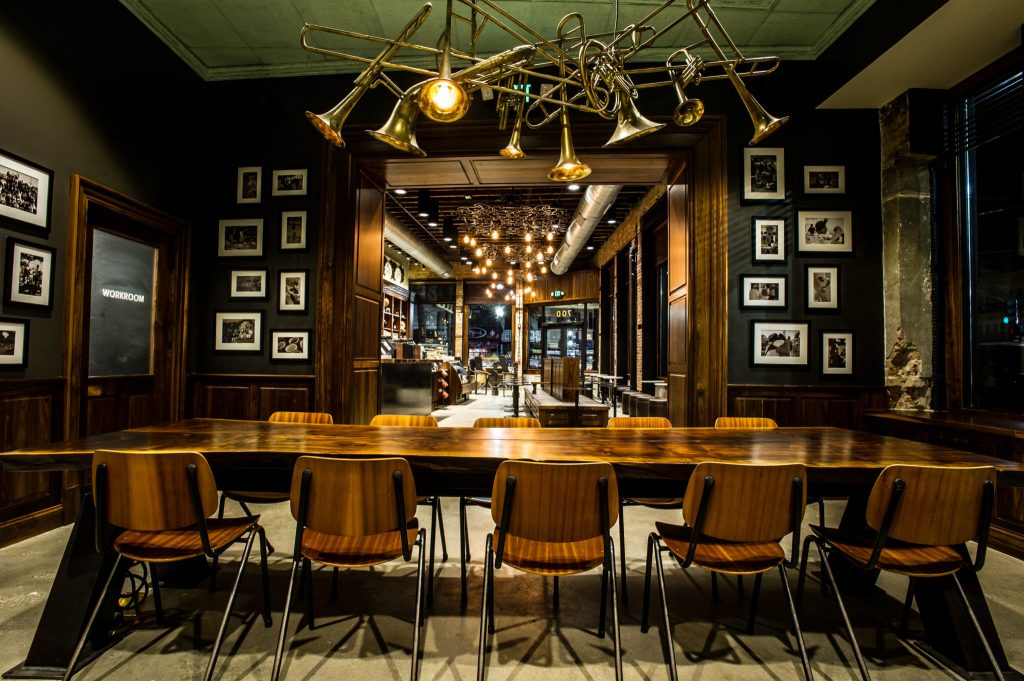
Call it a faculty lounge. Call it a faculty workroom. Call it the copy machine/fridge/microwave holder. Whatever you call the space for faculty and staff, it needs to change. I’ve said it before, and I’ll say it again: teacher retention is at an all-time low. Social and emotional needs are paramount to be met for learners and educators alike. The physical, mental, and emotional comfort for educators and learners is critical for success. Educators have created these amazing classroom spaces where learners feel safe and engaged. Educators put their heart and soul into their craft. Now, more than ever, educators need a space to collaborate, connect, reflect, and relax. How do we encourage these practices in the learning environment if we don’t offer a space for educators to do the same?
When I was an educator, I never used the faculty room. I entered it in the morning to get my mail, and I exited it in the afternoon after making my copies for the next day, and placing them in my mailbox. When I started teaching, I ate lunch with our department chair in her room every day. Then, my PLC team and I ate lunch in my room together every day. Being in a portable, the faculty room was too far away. When I was department chair, my room was the revolving door during lunch, and my mentee ate in my room every day. The teacher workroom was a room with no windows, and because people microwaved in it, it stunk. We found reprieve in meeting with each other any where but the faculty room.
As I taught high school, the furniture was appropriately proportionate to my colleagues and I to eat lunch in. When primary educators are relegated to a classroom to plan and collaborate, this is often times not the case. Physical comfort is essential for success in learning and relaxation. The faculty room should have agile furniture, proper lighting, and places to retreat and relax in independently. There are a number of furniture options out there that can function in a variety of capacities to ensure the most functionality for the money invested.
Sadly, the faculty room is often the first place overlooked when redesigning or designing a school. How are educators to be seen as professionals without the proper tools and meeting spaces to build and refine their craft? Teaching is a passion, and places for educators to connect with each other, and learn from each other, are pivotal. Designing a space that provides room for collaboration, spreading out, and rejuvenation with colleagues/independently is important to illustrate value and respect for your faculty.
While educators work together to prepare dynamic and differentiated lessons, let’s give them a space that inspires innovation and creativity. A space that speaks to differentiation and personal well-being. When educators are facilitated in a space that is comfortable and collaborative, the creative juices flow more freely, and this seeps out into the classroom. When educators feel respected and appreciated, just as our learners, they are more engaged, and the end result is more fruitful. Comfort and wellness can be contagious; investing in your educators’ communal space will have a ripple effect into every space in your school.
We recently discussed ways to make your classroom space an oasis. However, the need for a grown up space and a space for peer and collegiate discussion is necessary for the success of our educators. During the pandemic, learners weren’t the only ones separated from their peers and support systems. I read an article recently where pandemic teaching and learning allowed new educators to shine and become the experts for best practices and strategies to the veteran educators. Because the online teaching allowed a different platform for educators to observe each other, educators got to observe different ways to provide instruction (Ryan et al., 2023). When the faculty space provides an environment rich in a balance of collaboration and reprieve, and one where educators feel welcomed, it becomes a hub for new ideas and wellness.
It is time that the faculty spaces stop being overlooked, and instead, spend time on giving them a revamp. So often, there are extra spaces that become storage spaces. We should be converting these spaces into collaboration spaces for educators and learners. When the physical space embodies the vision and mission of the school/district, all boats rise, and success falls into place. It’s time to knock down those silos and provide a place for educators that promotes connectivity and collaboration and allows them to do this with ease in a space they want to visit.
References:
Ryan, M., Cziraky, M., Kain, K., McKendrick, H., & Miller, M. (2023). Learning, growing, embracing, transitioning, and changing: Exploring resilient teaching and learning during the COVID-19 shutdown. The Educational Forum, 87(2), 51–63. https://doi.org/10.1080/00131725.2022.2149911
 Edukater's Corner