
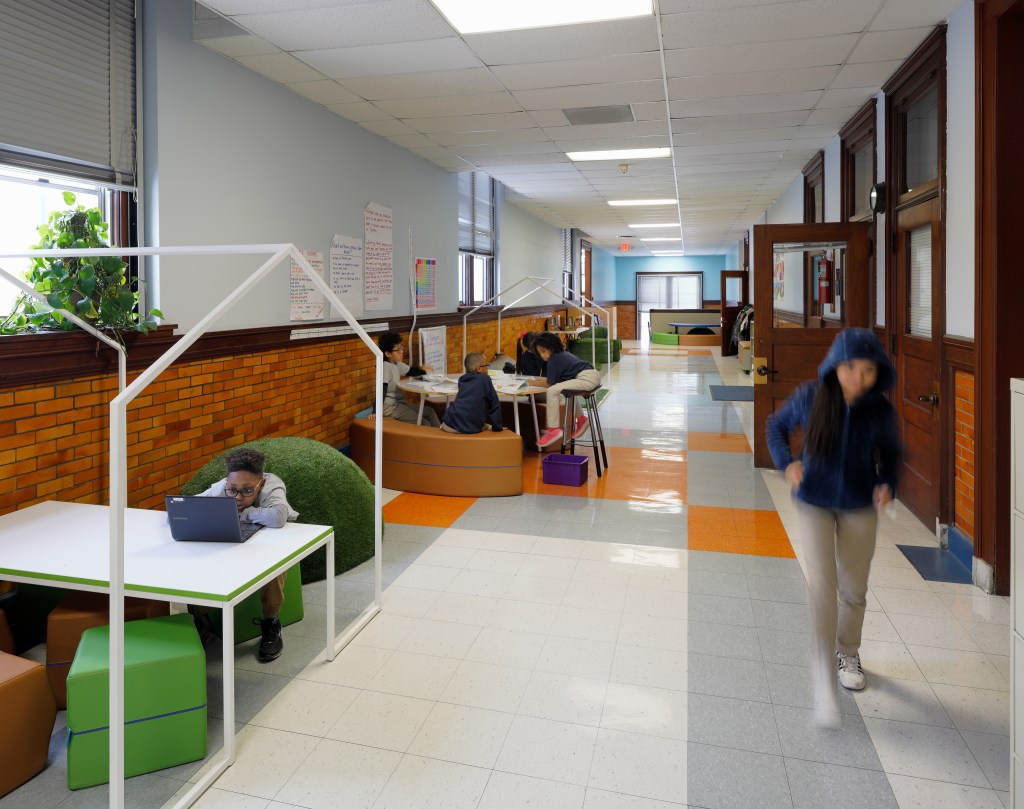
In 2020, the current state of education changed across the globe. In 2021, many school remained virtual. Educators taught to bubbles on screens instead of faces in a learning environment. When education went virtual, while some learners continued to thrive, others suffered. When learning went back to in-person in 2022, the social and emotional needs of learners have never been made more apparent. In speaking with a friend, who is a school psychologist, she mentioned that when going back to school, some educators are struggling with SEL when they need to prepare learners for assessments and keep up with the curriculum map. The fact is, and we see this every day on social media, learners learn when they know the educator cares. The 2022/23 school year is right around the corner and has already started for many states. Here’s what caring, and creating a culture of caring, can look like without sacrificing the curriculum.
START THE YEAR WITH AN INTEREST INVENTORY
During the first week of school, rules and procedures, where to find what, and the syllabus are important. On the first day, when learners enter class, review these things, but don’t forget to learn about them. What’s your favorite book? How do you learn best? How do you work best? What type of music do you enjoy? Learn their MI, and post the results in the room. Be sure to comment back on (at least one thing) the Interest Inventory, and take notes. Let this guide how you group learners, the type of music you play, options for choice boards, etc. Learning about your students starts the connection, and this sets the tone for the entire year.
CREATE AN ENVIRONMENT THAT EXUDES CARING
For the ten years that I taught, there were things that were a constant every day:
- I greeted my high schoolers at the door.
- Music was playing when they entered class and while they completed their bell work.
- The lights were off and the blinds were opened and soft lighting was on around the room.
- On the board was this: “If no one told you they love you today, please know that I DO.”
- I started each class with, “Good morning/good afternoon, my precious gems” and ended with “have a great rest of your day and make good choices.”
Greeting learners at the door gives you a chance to see your learner’s current state and to stop problems before they even start. I used to hold a letter in my hand while greeting learners. If it was clear that a learner needed a moment before entering, I asked him/her to deliver this sealed letter to the theatre director. That letter (to my dear friend, the theatre director), said to have a great day and I’d see him at lunch.
The music and lighting kept things calm. Sometimes, learners hummed along, sometimes learners asked who the artist was, and sometimes there was a corny connection to the topic (like playing “Ironic” on the day we discussed irony and explaining that the only thing ironic in that song is that none of those are ironic). The lighting kept things calm and collected, too.
One of the best TEDTalks out there is “Every Kid Needs a Champion” (which should be a mandatory watch for every educator). Rita Pearson said to her kids what I had written on my board every day.
When I started teaching, it was tenth-grade English. They still brought up at the ten-year reunion that I used to call them my precious gems and to make good choices. When I run into former students (some of whom are now educators themselves), they remember these things. These are the simple things that make learners feel calm and connected. Most importantly, these are how learners feel that they have adults who care for them.
KNOW YOUR LEARNERS OUTSIDE OF THE CLASSROOM
At the end of the day, in between grading papers, responding to emails, attending parent/teacher conferences, meeting with your PLC, lesson planning, and attending to your family, it can seem near impossible to bring yourself back to the campus. At least once a month, attend an event. Learners are always so excited to see their teacher in the stands or in the audience. If you can’t do this, do something during the school day. Make your classroom a safe space. House a book club during lunch. Know the score of the game the night before. We often say actions speak louder than words. These little actions let learners know you care.
GET CREATIVE WITH THE CURRICULUM
We all know the importance of pacing maps, teaching the standards, and preparing learners for benchmarks and exams. Lesson plans ask for the differentiated instruction component of each lesson. I always loved the freedom of the curriculum and the creativity I could have with the standards. How standards are taught is up for grabs. Teach vocabulary through a word of the day. Poetry vocabulary can be taught through poetry journals with a culminating poetry cafe. Do a debate with “Macbeth” and whether or not Lady Macbeth is a sympathetic character. Use the beginning of the year Mulitple Intelligences results and the Interest Inventory to help guide projects, grouping, and choice board options. The more creative you can get with the curriculum, the more personal this becomes to learners, and the better chance the learners have of remembering the content.
MAKE GENUINE CONNECTIONS
All of these suggestions are for naught if they are not approached genuinely. Learners are keen detectors of phony behavior. If a learner knows they are respected as a learner-work-in-progress, they will want to achieve greatness. When a learner knows they are accepted and valued, there is nothing in the way of them achieving that greatness.
 Edukater's Corner